
Self-loathing is one of the most painful and misunderstood experiences for individuals living with Borderline Personality Disorder (BPD). It can feel like an inescapable cycle of harsh self-criticism, shame, and emotional suffering — one that deeply affects relationships, self-worth, and daily life. But this inner war is not who you are. It’s something that developed over time — and it can be understood and healed.
In this post, we’ll explore why self-loathing shows up so intensely for people with BPD, how it manifests, and how understanding it can be the first step toward healing.
Where Does Self-Loathing Come From?
For many people with BPD, the roots of self-loathing trace back to early experiences of trauma, emotional neglect, or invalidating environments. If your feelings were ignored, minimized, or punished growing up, you may have learned to believe that your emotions — and even your identity — were somehow “wrong.” Over time, these messages can become internalized as deep shame and self-hatred.
On a biological level, research has shown that individuals with BPD may experience heightened amygdala activity (linked to fear and emotion) and reduced regulation by the prefrontal cortex, which makes it harder to manage painful emotions. The result? Emotions feel overwhelming — and often, they get turned inward.
Another key piece is identity disturbance — the sense of not having a stable sense of self. Without a grounded identity, it’s difficult to feel worthy, confident, or even real. Many people with BPD report chronic feelings of emptiness that reinforce the belief that they are broken, flawed, or unlovable.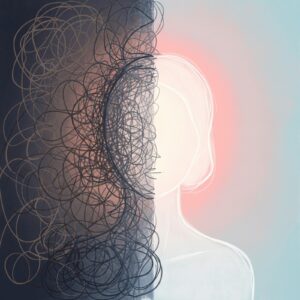
What Does Self-Loathing Look Like in BPD?
Self-loathing can be subtle, or it can be loud and intense. Here are some of the common ways it can show up:
- Harsh Inner Criticism
A relentless internal voice that focuses on flaws, failures, or past mistakes — and never acknowledges strengths. - Self-Destructive Behaviors
Engaging in self-harm, substance use, or risky behaviors as a way to punish oneself or escape emotional pain. - Unstable Self-Image
Struggling to know who you are or feeling like your sense of self changes constantly. This can lead to feelings of being “too much” or “not enough.” - Relationship Struggles
Fears of abandonment, intense idealization and devaluation, and difficulty trusting others can reinforce the belief that you’re unworthy of love. - Avoidance of Self-Reflection
Looking inward can feel unbearable — like opening the door to a flood of shame. So instead, many avoid self-examination altogether. - Dependence on External Validation
Seeking constant reassurance from others, only to feel empty or rejected again when it fades.
The Cycle of Emotional Dysregulation
One of the core features of BPD is emotional intensity — emotions that feel like tidal waves. When self-loathing is part of the mix, those waves can become destructive. A small trigger may spiral into intense shame or self-hatred, which can then lead to impulsive actions or emotional outbursts. Research on Dialectical Behavior Therapy (DBT) highlights how mindfulness and emotion regulation strategies can help individuals break free from these cycles.
These actions often lead to regret, guilt, or relational conflict — which then deepen the original self-loathing. This is the self-reinforcing cycle that can feel impossible to break.
But it’s not impossible. Awareness is the first step. When you begin to recognize this pattern, you can learn skills to interrupt it — with compassion and intention.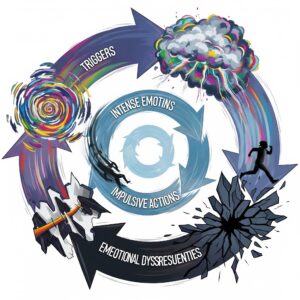
How Self-Loathing Impacts Daily Life
This kind of inner pain doesn’t stay hidden. It affects nearly every part of life, often in ways that go unspoken:
- Work & Career
Fear of failure, imposter syndrome, or perfectionism that leads to burnout and self-doubt. 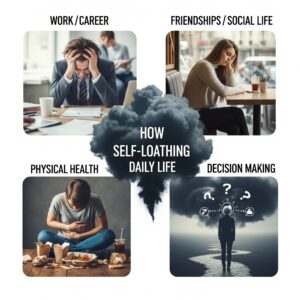 Friendships & Social Life
Avoiding social interaction due to fear of judgment, rejection, or being a “burden.”- Physical Health
Chronic stress, disrupted sleep, poor eating habits, or lack of self-care due to feeling undeserving. - Decision-Making
Constantly second-guessing choices or believing you don’t deserve success or happiness.
Understanding that these struggles are symptoms — not truths about who you are — can be deeply freeing. They are signals of pain, not evidence of brokenness.
You Are Not Your Self-Loathing
Self-loathing is not a character flaw — it is a response to overwhelming emotional pain and unmet needs. It’s something that was learned, not something that is true about you.
And like all learned patterns, it can be unlearned.
In our next post, we’ll explore practical, compassionate tools to help you begin healing from self-loathing and move toward a more grounded, accepting relationship with yourself.
You deserve kindness. Especially from yourself.
Leave a Reply